
What Does Thinning Hair Look Like? A Complete Visual Guide
Contents:
- Understanding What Thinning Hair Actually Looks Like
- Early Visual Signs of Hair Thinning
- Changes to Your Hairline and Parting
- Reduced Hair Volume and Flatter Appearance
- Increased Hair in the Shower and Hairbrush
- Physical Texture Changes
- Hair Becomes Noticeably Finer
- Loss of Natural Sheen and Texture
- Regional Patterns and Variations Across the UK
- What the Pros Know
- When Thinning Becomes Noticeable to Others
- Practical Steps to Assess Your Own Hair
- Common Causes and Why They Matter
- FAQ: What Does Thinning Hair Look Like?
- Is it normal to see my scalp when I part my hair?
- How much daily hair loss is normal?
- Can thinning hair be reversed?
- Should I see a doctor about thinning hair?
- What’s the difference between thinning hair and hair loss?
- Moving Forward with Confidence
Quick Answer: Thinning hair typically shows as wider gaps between strands, a larger visible scalp, reduced hair volume, and hair that appears finer in texture. You might notice more hair in the shower drain, flatter hair at the crown, or hair that no longer holds volume with styling products. Changes often develop gradually over months or years.
Understanding What Thinning Hair Actually Looks Like
Many people experience hair thinning at some point in their lives, yet few know what to look for or how to distinguish normal hair shedding from actual hair loss. Your hair is thinning when the diameter of individual strands becomes narrower, when the density decreases—meaning fewer hairs covering your scalp—or when you lose more hairs than your body replaces. The challenge is that these changes happen so gradually most people don’t notice until the condition is fairly advanced.
Recognising what does thinning hair look like requires understanding that it’s not always about bald patches. More often, it manifests as a subtle shift in how your hair sits, feels, and behaves. Your stylist might comment that your hair is “finer” or needs more frequent trims. Your parting might look slightly wider than before. These aren’t imaginary—they’re genuine indicators that something has changed.
Early Visual Signs of Hair Thinning
Changes to Your Hairline and Parting
One of the earliest signs appears at your parting line. If you typically part your hair down the middle or to one side, pay attention to whether you can see more scalp than you used to. A visible widening of the parting—perhaps from 2-3mm to 5-6mm or wider—suggests the density is decreasing. You might also notice your hairline receding slightly at the temples or around the front of the crown. This doesn’t mean you’re going bald overnight; it means the hairs in that area are becoming finer and fewer.
Similarly, when you pull your hair back into a ponytail or bun, the volume might feel noticeably thinner. What once required a medium elastic band might now require a small one, or you might need to wrap it multiple times to secure it firmly.
Reduced Hair Volume and Flatter Appearance
Thinning hair often loses its natural bounce and volume. Styles that once held their shape all day start to flatten by mid-afternoon. Your hair might not hold curls as well, or waves fall out quickly. At the scalp, you may see flatness where there used to be lift, particularly at the crown where many people first notice thinning.
This happens because each strand is thinner and lighter, so it can’t support the weight and structure of a full-bodied hairstyle. Products that once worked brilliantly—volumising mousses, thickening sprays, texture pastes—suddenly feel less effective, even when used generously.
Increased Hair in the Shower and Hairbrush
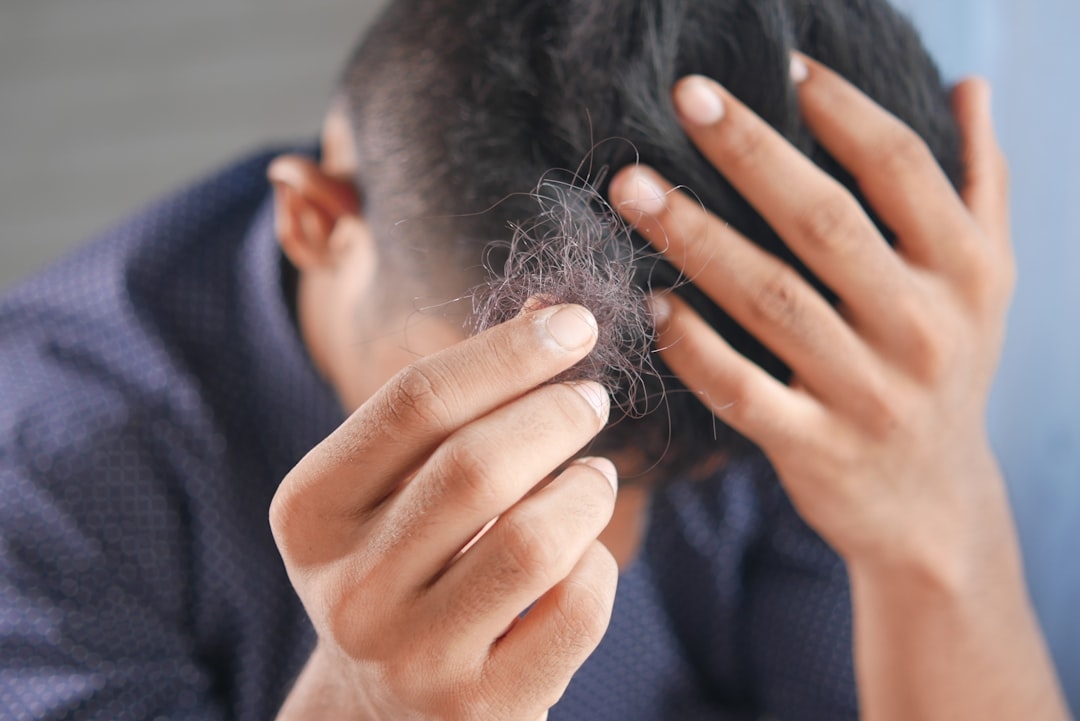
The amount of hair you shed daily matters. Losing 50 to 100 hairs per day is normal. However, if you’re finding noticeably more hair wrapped around the shower drain, collecting in your brush after styling, or clumping on your pillow, that’s a red flag. Some people describe it as hair looking like a “nest” in the brush, or finding a handful of hair rather than a few strands when they run their fingers through their hair.
Seasonal shedding—particularly in spring and autumn—can increase hair loss temporarily, but if the excessive shedding persists for more than three months, it warrants attention.
Physical Texture Changes
Hair Becomes Noticeably Finer
When your hair is thinning, individual strands feel thinner and lighter. You might notice that hair you could once easily feel between your fingers feels almost wispy. The hair diameter actually decreases—sometimes from, say, 70 micrometres to 50 micrometres. That might sound like a tiny difference, but it’s visually noticeable and explains why your hair looks less substantial.
Your hairdresser will likely comment on this change. Professionals trained to assess hair health notice immediately when a client’s hair has become finer or is thinning at the roots. They might recommend changing your cut style or using different products to work with your new hair texture.
Loss of Natural Sheen and Texture
Thinning hair sometimes loses its natural shine and appears duller or more brittle. This is because thinner hairs have a smaller surface area to reflect light. Additionally, if thinning is caused by nutritional deficiencies, hormonal changes, or stress, the hairs being produced may be weaker structurally. You might find that your hair breaks more easily, tangles more frequently, or feels rougher when you run your fingers through it.
Regional Patterns and Variations Across the UK
Hair thinning patterns can vary slightly depending on genetics, age, and life circumstances—factors that sometimes correlate with geography and lifestyle. In London and the Southeast, where stress levels tend to run high and work culture emphasises long hours, stress-induced hair loss is commonly reported. In rural areas like the Cotswolds or Scottish Highlands, nutritional deficiencies related to seasonal diet changes might more frequently contribute to thinning.
Similarly, younger people in university towns like Oxford or Cambridge sometimes experience thinning due to stress during exams or poor nutrition while studying. Coastal areas like the South West may have different environmental stressors affecting hair health compared to industrial regions in the Midlands or North West.
These are broad observations, but they matter because the underlying cause of thinning varies. Identifying which pattern applies to you helps guide next steps.
What the Pros Know
Hairdressers and trichologists spot thinning hair by looking at density distribution, not just overall volume. They assess how many hairs sit in a square centimetre of scalp. Healthy scalp density is typically 100-200 hairs per square centimetre. When this drops below 80, thinning becomes visually apparent to trained eyes—and soon after, to most people. Professionals also check the anagen (growth) phase ratio. If too many hairs are in the telogen (shedding) phase simultaneously, it signals a problem. They’ll recommend seeing a trichologist if the thinning is rapid or accompanied by scalp irritation.
When Thinning Becomes Noticeable to Others
Most people don’t comment on another person’s thinning hair until it’s quite pronounced. However, you might first notice it yourself in photographs from 6-12 months ago compared to recent ones. You might catch your reflection from an unexpected angle and notice the scalp is more visible. Or someone close to you—a partner, family member, or friend—might gently mention they’ve noticed a change.
This progression matters. Mild thinning that you notice only in specific lighting or angles is very different from moderate thinning where the scalp is visible throughout the day. Severe thinning, where significant portions of the scalp are clearly visible, usually develops over years rather than months, especially if the underlying cause isn’t addressed.
Practical Steps to Assess Your Own Hair
- Take a baseline photo: Photograph your scalp parting in consistent lighting. Compare monthly.
- Count shed hairs: Collect hair from your brush or shower drain over a day. Aim for an approximate count rather than obsessing over exact numbers.
- Measure your ponytail: Wrap a hair tie around your usual ponytail. Note its size. Check in 3-6 months.
- Check your hairline: Look at your hairline from the side in a mirror with bright overhead lighting. Note any visible changes.
- Feel the texture: Compare the feel of hairs at the crown versus the back of your head. Thinner areas feel visibly finer.
- Assess styling duration: Time how long your usual hairstyle holds. If volume drops after 4-6 hours instead of 8-10, that’s a sign of thinning.
Common Causes and Why They Matter
Understanding what does thinning hair look like is just the starting point. Identifying the cause directs the appropriate solution. Androgenetic alopecia (genetic hair loss) develops gradually and often follows a family pattern—your mother’s side, father’s side, or both. Nutritional deficiencies (iron, B12, zinc) can cause sudden-onset thinning that, importantly, can be reversed. Telogen effluvium (stress-induced shedding) typically produces uniform thinning across the scalp rather than patterned loss. Thyroid issues, hormonal changes related to menopause or pregnancy, scalp conditions like seborrheic dermatitis, and certain medications all have distinct presentations.
A GP or trichologist can differentiate these causes through examination, hair pull tests, and sometimes blood work. This is important because some causes resolve with lifestyle changes or supplements (roughly £15-40 per month for quality options), while others require targeted treatment.
FAQ: What Does Thinning Hair Look Like?
Is it normal to see my scalp when I part my hair?
Slight scalp visibility through a parting is normal. However, if the visible area is noticeably wider than it was 6-12 months ago, or if you can see scalp clearly without parting your hair back tightly, this suggests thinning. Most people with healthy hair density have minimal scalp visibility even with a tight parting.
How much daily hair loss is normal?
Shedding 50-100 hairs daily is normal. You shed these naturally as part of your hair growth cycle. If you’re finding significantly more—a handful or larger clumps—in your brush or shower drain daily for more than a few weeks, it warrants investigation.
Can thinning hair be reversed?
Yes, sometimes. If thinning is caused by nutritional deficiency, addressing the deficiency often restores hair. Stress-induced telogen effluvium usually resolves within 6-12 months once stress decreases. Genetic androgenetic alopecia can be slowed with treatments like minoxidil (Regaine, available over-the-counter at pharmacies for £20-50 per month) or prescription finasteride. However, once hair follicles shrink significantly, regrowth becomes unlikely.
Should I see a doctor about thinning hair?
See your GP if thinning develops rapidly over weeks, is accompanied by scalp pain or itching, follows major life stress or medical events, or is accompanied by other symptoms like fatigue or weight changes. A GP can rule out medical causes and refer you to a trichologist if needed.
What’s the difference between thinning hair and hair loss?
Thinning hair refers to a decrease in hair diameter or density—your overall hair mass reduces. Hair loss refers to hairs falling out prematurely or follicles stopping production. They’re related but distinct. You can have thinning without significant loss, or sudden loss without permanent thinning, depending on the cause.
Moving Forward with Confidence
Noticing your hair is thinning can feel unsettling, but early recognition is genuinely useful. The earlier you identify and address the cause—whether that’s managing stress, adjusting your diet, treating a scalp condition, or exploring medical options—the better your outcomes. Some causes are entirely reversible. Others progress slowly enough that modern treatments can help maintain what you have or regrow what’s been lost.
Start by observing your own hair honestly. Use the practical assessment steps above. Photograph your scalp parting, track shedding, and notice changes in how your hair behaves. If you’re concerned, book a consultation with a trichologist (typically £80-150 for an initial assessment) or discuss it with your GP. Understanding what does thinning hair look like—and recognising it in your own—puts you in control of your next steps.