

How to Stop Hair Breakage: Expert Strategies for Stronger, Healthier Hair
Contents:
- What Causes Hair Breakage and Why It Matters
- Use the Correct Hair Brushing Technique
- Minimise Heat Styling Frequency and Use Proper Protection
- Address Moisture Imbalance with Deep Conditioning
- Trim Regularly to Prevent Split Ends From Multiplying
- Choose the Right Shampoo and Avoid Over-Washing
- Adjust Your Diet and Hydration for Internal Hair Strength
- Comparison: External vs. Internal Approaches to Stopping Hair Breakage
- Choosing the Right Strategy for Your Situation
- Frequently Asked Questions About Hair Breakage
- How long does it take to stop hair breakage once you start treatment?
- Can breakage be reversed, or can you only prevent future breakage?
- Is breakage the same as hair loss?
- Which hairstyles prevent breakage?
- Can stress cause hair breakage?
- Moving Forward: Creating Your Breakage-Prevention Plan
Picture this: you’re brushing your hair on a Monday morning, and strands keep snapping off as you work through the knots. By evening, your pillow has more hair than your head seems to. If this scenario feels familiar, you’re dealing with one of the most common hair struggles—breakage. Unlike hair loss, which involves follicles shedding from the root, breakage happens when the hair shaft itself fractures midway, leaving you with shorter, thinner-looking hair overall.
The frustration is real, especially when you’re living in a small space where managing hair care products and tools requires strategy. The good news is that understanding what causes breakage and implementing targeted solutions can genuinely transform your hair health within weeks.
What Causes Hair Breakage and Why It Matters
Hair breakage occurs when the protein structure of your hair shaft becomes compromised. Your hair strands are made primarily of a protein called keratin, arranged in overlapping layers called the cuticle. When these layers become damaged, the inner cortex (which contains moisture and proteins) becomes exposed, and the hair simply snaps.
According to trichologist Margaret Chen from the Institute of Hair and Scalp Science, “Most clients don’t realise that breakage is actually preventable. The majority of cases I see stem from three controllable factors: mechanical damage during styling, moisture imbalance, and chemical stress. Address these three, and you’ll see dramatic improvement.”
The consequences of untreated breakage extend beyond aesthetics. Weakened hair is more prone to splitting, which—if left unchecked—can travel up the hair shaft and damage healthy growth above it. This creates a cascading effect where your hair progressively becomes shorter and thinner, regardless of how long you leave it to grow.
1. Use the Correct Hair Brushing Technique
How you brush your hair matters far more than most people realise. Aggressive brushing, especially on wet hair, is one of the leading causes of breakage. When hair is wet, the cuticles are raised and the cortex is swollen with water, making it significantly more fragile—estimates suggest wet hair is up to 50% weaker than dry hair.
Start by allowing your hair to air-dry for at least 70-80% of the way before using any brush. When you do brush, use a wide-toothed comb or paddle brush (never fine-toothed on wet hair) and begin from the ends, working upward in small sections. This prevents dragging knots through long sections of hair, which creates mechanical stress and snapping.
Consider applying a leave-in conditioner or detangling spray before brushing. Products like SheaMoisture Detangler Spray (£8-12) provide slip that reduces friction. The technique matters too: gentle, short strokes are infinitely better than one harsh pull through the entire length. If you’re in a small apartment with limited mirror space, focus on one section at a time rather than rushing through the whole head.
Real example: Sarah, a London-based marketing professional with shoulder-length brown hair, noticed significant breakage after her daily post-shower routine of vigorous brushing. After switching to a wooden wide-toothed comb and brushing only when 80% dry, she observed noticeably less breakage within three weeks. She still uses the same brush daily but with intention rather than force.
2. Minimise Heat Styling Frequency and Use Proper Protection
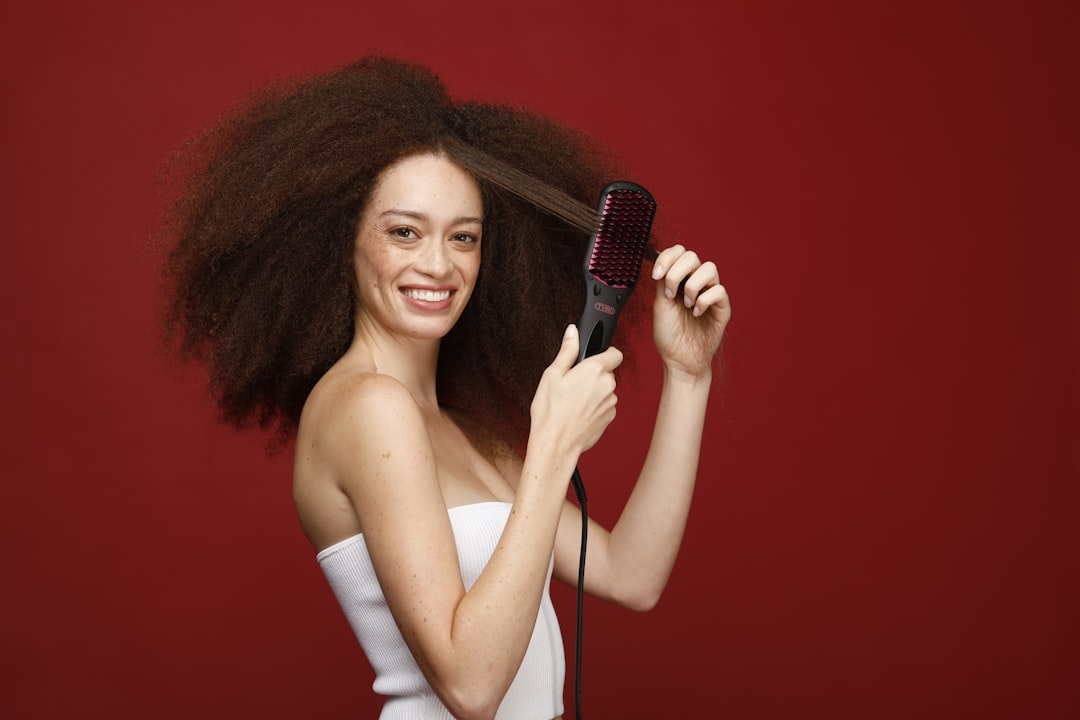
Heat styling—blow-dryers, straighteners, and curling irons—denatures the protein structure of hair. When you apply heat above 150°C, the water inside the hair shaft turns to steam, creating pressure that can literally burst the cuticles from the inside out. Many people apply heat damage daily without realising the cumulative effect.
The most straightforward solution is to reduce heat styling frequency. Aim for no more than 2-3 days per week with heat tools. On other days, embrace air-drying, overnight plaits, or heatless styling methods. This alone can reduce breakage by up to 40% within a month.
When you do use heat, always apply a heat protectant product first. These create a barrier (usually silicone-based) that absorbs and distributes heat more evenly. Recommended options include:
- Budget-friendly: Cantu Shea Butter Leave-In Conditioner (£4-6) works as both heat protectant and conditioning product
- Mid-range: Olaplex No. 9 Bond Protectant Heat Protectant Spray (£28-35), though expensive, contains bond-building technology that actually repairs while protecting
- Specialist: K18 Leave-In Molecular Repair Hair Mask (£45-52) is formulated specifically for heat-damaged hair restoration
Set your tools to the lowest effective temperature. Your hair doesn’t need 200°C heat to style properly—most blow-dryers perform adequately at 120-140°C. Straighteners and curling irons can work effectively at 160°C for most hair types, with thicker hair potentially requiring 180°C maximum. Lower temperatures mean dramatically less protein damage.
3. Address Moisture Imbalance with Deep Conditioning
Hair breakage often signals a moisture problem. Hair needs to maintain a moisture content of roughly 11-13% to remain elastic and strong. Below this threshold, hair becomes brittle and snaps easily. Conversely, over-moisturised hair (above 13%) can become too soft and weak, also prone to breakage—though this is less common than dryness.
Deep conditioning treatments work by penetrating the hair cortex and restoring moisture and protein. The frequency depends on your hair type: fine or thin hair typically needs deep conditioning weekly, while thick or coarse hair might need it 2-3 times per week.
Implement a deep conditioning routine:
- Apply the treatment to damp hair, focusing on the mid-lengths and ends (not the scalp)
- Leave it on for 15-20 minutes (or follow product instructions)
- Rinse thoroughly with cool water to seal the cuticles
- Repeat weekly or as needed based on your hair’s response
Effective deep conditioning products across different price points include:
- Budget: Garnier Banana Hair Food Mask (£1.50-3), surprisingly effective for basic moisture restoration
- Mid-range: Carol’s Daughter Black Vanilla Moisture & Shine Mask (£16-20), rich in oils and butters
- Premium: Kerastase Elixir Ultime L’Huile Originale Hair Oil Mask (£35-45), lightweight but deeply nourishing
A particularly effective technique is the “piñata method” for apartment living: apply your deep conditioner, tie your hair up in a bun or loose knot on top of your head (to avoid staining furniture), and go about your day for 20-30 minutes. This is far simpler than allocating spa time and works brilliantly in limited spaces.
4. Trim Regularly to Prevent Split Ends From Multiplying
This might seem counterintuitive when you’re trying to grow your hair, but regular trims are essential for preventing breakage. Once a hair strand splits at the end, the damage travels upward along the hair shaft. A split that starts at the very tip can eventually compromise the entire length of that hair over weeks or months.
Regular trims prevent this cascade of damage. A trim every 8-12 weeks (depending on how damaged your ends become) removes the compromised sections before they can travel further up the hair shaft. The result: you actually retain more length overall because you’re removing dead ends rather than losing entire strands to breakage.
You don’t need extensive cuts. A “dusting” (removing ¼ to ½ inch every 6-8 weeks) is often sufficient if your hair is already in decent condition. This costs £12-20 at most UK salons compared to £25-40 for more substantial trims. Budget accordingly: £50-80 every three months is a reasonable investment that actually saves your hair.
If budget is tight, consider salon student services or community college cosmetology programs, where qualified trainees perform cuts under supervision for £8-15. Your ends will thank you.
5. Choose the Right Shampoo and Avoid Over-Washing
Many people unknowingly worsen breakage through harsh shampoos and excessive washing. Standard sulphate-based shampoos strip the natural oils from your hair, leaving it dry and weak. Washing daily (or even every other day) compounds this problem by preventing your scalp’s natural oils from travelling down the hair shaft where they’re needed for protection.
Switch to a sulphate-free or gentler shampoo formula. These cleanse without stripping, preserving the scalp’s natural sebum which is your hair’s built-in conditioner and protectant. Recommended options include:
- Budget: Superdrug B. Loved Shea Conditioner Shampoo Bar (£2-3), concentrated formula lasting months
- Mid-range: Bumble and bumble Hairdresser’s Invisible Oil Shampoo (£20-25), enriched with oils that protect strands
- Specialist: SheaMoisture Raw Shea Butter Restorative Shampoo (£8-12), specifically formulated to reduce breakage in damaged hair
Equally important: reduce washing frequency to 2-3 times per week. On non-wash days, use dry shampoo (£3-8) to absorb oil and add texture. This allows your scalp to maintain healthy oil levels and gives your hair regular “rest days” from the mechanical stress of washing and conditioning.
When you do wash, massage gently, focus shampoo on the scalp (where it’s needed), and rinse thoroughly. Don’t scrub or agitate the hair lengths themselves.
6. Adjust Your Diet and Hydration for Internal Hair Strength
Breakage isn’t just a surface problem—it reflects internal hair health too. Hair is made from keratin, a protein that your body synthesises from amino acids in your diet. If you’re not consuming enough protein, your hair literally cannot build strong strands from the inside out.
Aim for 50-60g of protein daily (adjust based on your weight and activity level). Quality sources include lean meats, eggs, legumes, Greek yoghurt, nuts, and seeds. A single egg provides 6g of protein and is one of the few foods containing all nine essential amino acids needed for keratin synthesis.
Additionally, biotin (vitamin B7) plays a crucial role in keratin production. Foods rich in biotin include eggs, almonds, sweet potatoes, and salmon. If diet alone seems insufficient, a biotin supplement (2.5mg daily, approximately £5-10 for a month’s supply) has modest but measurable evidence for improving hair strength.
Hydration matters too. Hair draws moisture from your bloodstream, so dehydration literally makes hair brittle. Aim for 2-3 litres of water daily, adjusted for activity and climate. This is particularly important in UK winter when central heating dries both skin and hair.
Comparison: External vs. Internal Approaches to Stopping Hair Breakage
Understanding the difference between quick fixes and sustainable solutions helps prioritise your efforts:
| Approach | External (Topical) | Internal (Nutritional) |
|---|---|---|
| Speed of Results | 1-2 weeks (visible improvement) | 6-8 weeks (new hair growth reflects changes) |
| Cost | £20-100 per month for products | £5-20 per month for supplements/dietary changes |
| Effort Required | Moderate (technique changes, product swaps) | Low (dietary consistency, daily hydration) |
| Sustainability | High (becomes routine) | Very high (part of general health) |
| Effectiveness for Existing Breakage | Prevents new breakage, improves current hair condition | Ensures future hair grows stronger from the root |
The most effective approach combines both: external strategies immediately reduce breakage on existing hair, while internal changes ensure that new hair growing out is stronger from the beginning. This dual approach produces results within 4-6 weeks.
Choosing the Right Strategy for Your Situation
Everyone’s hair is different, and priorities vary. To determine which strategies to prioritise:
If your breakage is concentrated at the ends: Prioritise regular trims (every 8 weeks) and deep conditioning. This suggests moisture loss rather than structural weakness throughout the hair.
If breakage is throughout the hair length: Reduce heat styling and evaluate your brushing technique. This pattern indicates mechanical damage or moisture imbalance affecting the entire strand.
If breakage worsens after washing: Switch to gentler shampoo and reduce washing frequency. Your hair is being damaged by cleaning products or the mechanical stress of frequent washing.
If breakage occurs regardless of hair care routine: Assess diet and hydration. Your hair may lack the internal resources to repair and strengthen itself, suggesting a nutritional rather than topical solution.
Start with 2-3 strategies that address your specific breakage pattern, implement them consistently for 4 weeks, then assess results. Most people see noticeable improvement within this timeframe. Then refine based on what works for your unique hair.
Frequently Asked Questions About Hair Breakage
How long does it take to stop hair breakage once you start treatment?
Visible reduction in breakage typically occurs within 2-3 weeks of consistent care changes, particularly when you address the primary cause (usually mechanical damage or moisture imbalance). Significant improvement—where breakage becomes a minor rather than major concern—typically requires 6-8 weeks. Complete resolution can take 3-4 months as damaged hair grows out and is replaced by new, healthier strands.
Can breakage be reversed, or can you only prevent future breakage?
Once a hair strand breaks, that specific piece cannot be mended. However, you can prevent the break from worsening (preventing it from splitting further up the hair) through proper conditioning and protective styling. You can also dramatically improve the overall appearance and strength of your hair through the strategies outlined above, so affected hair becomes stronger and less prone to further damage.
Is breakage the same as hair loss?
No. Breakage occurs when the hair shaft snaps midway along its length. Hair loss (shedding) occurs when hair falls out from the root, usually as part of the natural hair growth cycle. Breakage is preventable and reversible; shedding is typically not a concern unless you’re losing significantly more than 50-100 hairs daily.
Which hairstyles prevent breakage?
Low-tension styles like loose waves, soft braids (not tight), and buns worn loosely are gentlest on hair. Avoid tight ponytails, tight braids, and extensions that create tension at the roots. For sleeping, a silk or satin pillowcase (£10-20) reduces friction breakage, or sleep with hair in a loose plait. These changes alone can reduce nighttime breakage by 20-30%.
Can stress cause hair breakage?
Chronic stress can contribute to overall hair weakness by diverting nutrients away from hair production, but it’s rarely the sole cause of visible breakage. Address stress through general wellness (exercise, sleep, meditation), but simultaneously tackle the external and nutritional factors listed above for faster, more visible improvement.
Moving Forward: Creating Your Breakage-Prevention Plan
Hair breakage isn’t inevitable or permanent. The strategies outlined here work because they address the actual mechanisms of breakage—mechanical damage, moisture loss, and protein deficiency—rather than masking symptoms with expensive products that claim to fix everything.
Your next step is simple: identify which strategy resonates most with your current hair situation. If you’re brushing aggressively, start with technique changes this week. If you’re heat-styling daily, introduce a heat-free day tomorrow. If your ends feel straw-like, schedule a trim for next week. Small, targeted changes compound rapidly.
Many people see such noticeable improvement in their hair’s appearance and strength that these strategies naturally become permanent habits rather than temporary fixes. The investment—whether in products, time, or dietary awareness—pays dividends not just in appearance but in the genuine confidence that comes from healthy, strong hair.